Residency programming
Rani Arbo & daisy mayhem treasure the opportunity to partner with presenters and connect with the local community. Sometimes this means simply talking with audience members or visiting a local radio station. Other times, it means bringing our music and conversation into elementary schools, high schools, colleges, hospitals, senior centers, homeless shelters, museums and libraries. Below is a sampling of some of the programs we have offered. We are always open to new ideas.
Family/School Show
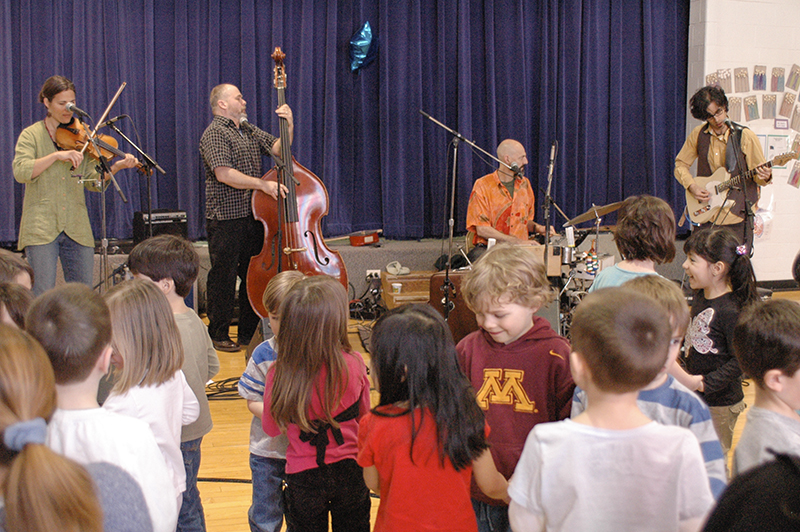
This upbeat, participatory show draws from the band’s award-winning 2010 family CD, Ranky Tanky. 45-60 minutes long, this show is ideally suited for children aged pre-K to grade 4. We also have presented it to older elementary and high school age students, incorporating repertoire from our adult show and allowing time for Q & A. In school settings, we are happy to work with educators on curricular tie-ins.
Recycled Rhythms
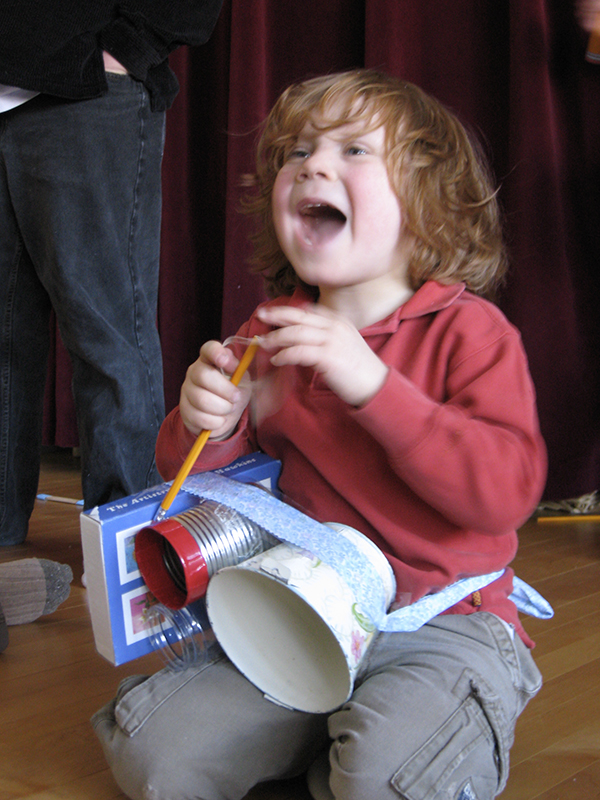 Percussionist Scott Kessel presents Recycled Rhythms both as an interactive, all-ages workshop and/or a one-man performance featuring his recycled drum kit. In the hands-on workshop, participants use recycled materials to create a miniature “Drumship Enterprise” and a wooden harmonica. If time allows, Scott teaches rhythms from around the globe and leads a celebratory drumming parade. This workshop can be tailored to specific or mixed-age groups, and for groups from 10 to 100+ (with enough volunteer help!).
For more information, please download the full workshop description below.
Arts in Medicine
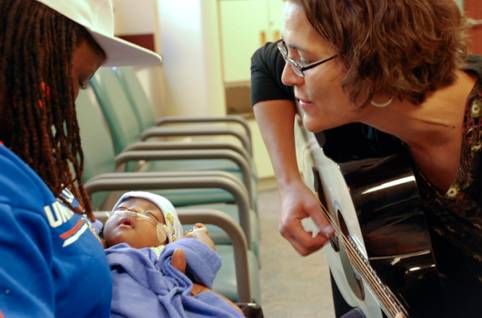 Art — musical, literary and visual — helps us recall and celebrate the strength at our core, even in the most trying of circumstances. Rani Arbo combines her experiences as a musician, hospice volunteer, and a cancer survivor to offer fiddling, singing and companionship in a variety of medical settings. Solo or with other members of the band, Rani can visit hospice patients and families, as well as pediatric clinics, surgery recovery units, infusion centers, and nursing homes. She and the band are available for in-service programs, offering a mix of performance and reflective discussion for medical staff and trainees. Rani has completed Arts in Medicine residencies at the McAninch Arts Center in Glen Ellyn IL, California State University in Chico, the University of Florida in Gainesville.
Choral Collaborations

Our shows always enlist the audience to sing along — but we also love to go deeper into collaborations by pairing up with a local high school, college, or community choir to present songs together. Several of our tunes have been arranged for choir by Christopher Eastburn of Boston’s Family Folk Chorale (with whom we have performed); we also often have performed Rani’s setting Crossing the Bar, as well as Paul Halley’s setting of Pete Seeger’s To My Old Brown Earth. Minimal rehearsal is required if a choir can take time to learn the music in advance, and the group is always invited to open the show with a few songs of their own. These collaborations are energizing for everyone!
Interactive Band Workshops
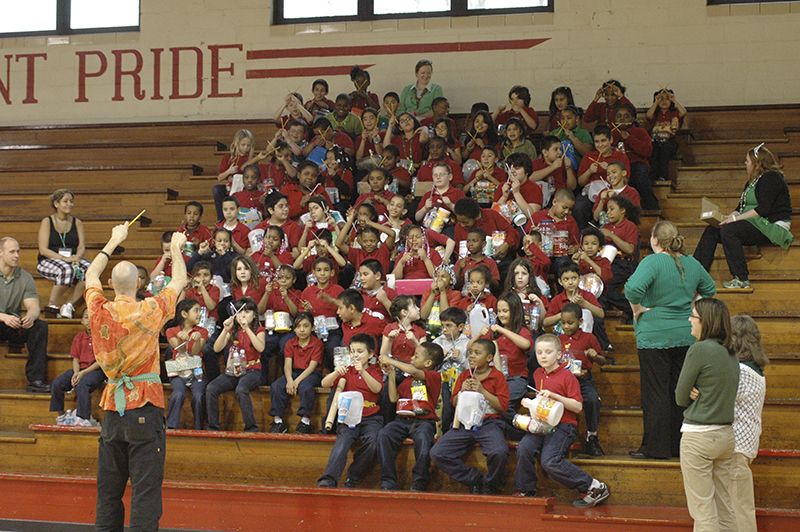 At festivals and in high school and college settings, we have presented a wide variety of interactive workshops. Here are some favorites.
Harmony Singing: We love nothing more than four-part harmony singing! In this workshop we can explore how chords are made, what feelings different intervals evoke, and share our tips and tricks for harmony singing. This workshop culminates in a multi-part a capella rendition of Kpan Logo, a traditional Ghanaian drum rhythm.
Song Arranging: How do you arrange a song to make it shine? Step by step, we’ll share the pathways we took to find some of our band song arrangements, discovering what works — and what doesn’t — along the way.
Being a Band: What is it like to be in a band? High school students, in particular, pose insightful questions about band life, and, after 25 years on the road together, we still enjoy answering them. These conversations are a chance to reflect and to share some universal ideas of what makes a partnership work.
Musical Conversations – the Art of Improvisation: Every musician has a unique voice, and it takes a combination of technical skill and creativity to allow an improviser to speak powerfully. We discuss how we practice improving our improvising skills, both technical and creative — and talk about how those lessons apply to the world beyond music.